
Here’s a riddle from The Clock That Wept
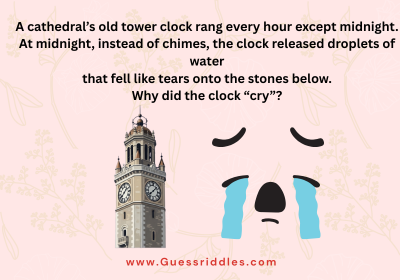
The Clock That Wept
A cathedral’s old tower clock rang every hour except midnight.
At midnight, instead of chimes, the clock released droplets of water
that fell like tears onto the stones below.
Why did the clock “cry”?
Answer:
Condensation formed inside the metal at night, dripping exactly at midnight.
Explanation:
The Riddle
A cathedral’s old tower clock rang every hour except midnight.
At midnight, instead of chimes, the clock released droplets of water
that fell like tears onto the stones below.
Why did the clock “cry”?
Step 1: Establishing the Omen
Midnight is doing heavy symbolic work here:
- Midnight → endings, thresholds, death, judgment
- Silence instead of chimes → something broken or forbidden
- Water falling like tears → grief, mourning, awareness
The riddle invites the idea that the clock knows something—that it mourns the passing of the day or some ancient event.
That emotional reading is intentional misdirection.
Step 2: Separating Function from Timing
We’re told two key facts:
- The clock works every other hour
- At exactly midnight, it does not chime, but drips water
So:
- The mechanism isn’t fully broken
- Midnight coincides with a physical change, not a random failure
That points away from symbolism and toward environmental conditions.
Step 3: The Real Cause Revealed
The answer explains:
Condensation formed inside the metal at night, dripping exactly at midnight.
Here’s how that creates the illusion of a “crying” clock:
1. Metal and Temperature Change
Old tower clocks are full of:
- Large metal gears
- Iron housings
- Hollow chambers
Metal cools rapidly at night. As temperatures drop, especially around midnight, warm air trapped inside the clock meets cold metal surfaces.
2. Condensation Forms
When warm, moist air cools:
- Water vapor condenses into droplets
- Droplets collect along seams and edges
- Gravity pulls them downward
This process peaks when:
- The night reaches its coldest stable point
- Often around midnight or shortly after
3. Why the Clock Doesn’t Chime
At midnight:
- Condensed moisture slightly interferes with the striking mechanism
- The hammer may stick or fail to engage briefly
- The clock skips the chime cycle
Instead, the built-up condensation releases—dripping out.
4. Why It Looks Intentional
The water:
- Falls rhythmically
- Emerges from the clock face or housing
- Appears only at one significant hour
To an observer below, it looks deliberate—like tears shed at a meaningful moment.
Step 4: Why This Happened Only at Midnight
The riddle’s precision matters:
- Midnight marks the transition between days
- It often aligns with maximum cooling and condensation
- The clock’s materials respond predictably to that change
The clock doesn’t choose midnight—physics does.
Final Answer Explained
Why did the clock “cry”?
Because condensation formed inside the metal clock as night temperatures dropped, and at midnight the collected water dripped out instead of the clock chiming.
Riddles by Category:


Previous Post:Tricky Logic Riddles to Challenge Your Mind